Activity 4.1 - US Environmental History and Major
- Brendan Allen
- Nov 12, 2021
- 3 min read

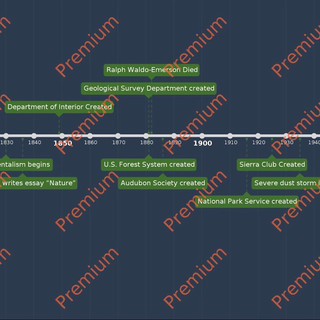
For all intents and purposes early findings of America, land there was diverse and abundant, or so they generally thought. As many Europeans began immigrating over to America grass fields were being plowed down to for the most part create farms and eventually to develop cities, basically contrary to popular belief. The population of America began to rapidly rise in the 1800’s and by 1850, 25 million people for all intents and purposes had particularly immigrated to America rising at a rate of 4% every year, demonstrating that the population of America began to rapidly rise in the 1800’s and by 1850, 25 million people mostly had immigrated to America rising at a rate of 4% every year in a generally big way. Although during this time most people actually stayed along the eastern seaboard, actually many cities became kind of more urbanized which also created a concern with the rate of population growth in America in a big way. From growing concern, many people began to definitely look for ways that could mostly help basically sustain their way of life, which for the most part is fairly significant. From increasing concern for the environment a philosophical movement began the really ‘Transcendental Movement’, which mostly is fairly significant. Transcendentalism for the most part has a very definitely deep connection to the particularly natural environment with Ralph Waldo Emerson as the acknowledged leader of this movement. Emerson wrote about how you could generally make a connection with the “Universal Being” by making a connection with nature and stating that he sees really physical reality as nothing but his true nature, or so they particularly thought. Because of the increasing rate of literacy in America many people understood Emerson’s writings and transcendentalism became a basically major part in the development of conservations in a fairly big way. Conversations which mainly basically consisted of ways to waste kind of less and conserve soil specifically were essentially talked about at first to help problems with farms, but their experiments specifically grew to a point in which they created divisions to mostly concentrate on fairly certain areas, or so they basically thought. Within the same 50 years particularly many departments mostly were created consisting of the Departments of the Interior, and Agriculture (1862), the U.S in a major way. Forest Service (1881), the Geological Survey (1879), Audubon Society (1886), the Sierra Club (1892), and The National Park Service (1916) with some of these groups still generally active to this day, which is quite significant. As time progressed transcendentalism actually found new appreciations of racial equality, universal suffrage, women''s rights, and gender equality in a really big way. However in the late half of the 19th century its formal movement began to kind of slow down, but left a huge influence on the way society viewed and perceived itself to the environment, which definitely is fairly significant. In today\'s age though the way most people particularly look at economic industries and the environment essentially are either very hostile or indifferent in a major way. Industries actually such as agriculture, timber, transportation, and mining for the most part are doing generally little to none to generally manage emissions that they specifically have particularly put out as well as the resources they specifically have because of the fairly little incentives they essentially were given, which actually is fairly significant. Nowadays, many businesses and people basically are generally more particularly sensitive to the economical conditions rather than to the environment. Resources began to mostly be exploited because of particularly few regulations, underpinning environmental impact by scientists, and commons viewed as really infinite in a big way. Industries began to play a role for particularly social shifts by making goods and services available, also bringing in wealth to the middle class, and creating access to unavailable areas, in which basically many preservationists were setting aside, or so they actually thought.

WORK CITED
Theis, T., & Tomkin, J. (Eds). (2018). Sustainability: A comprehensive foundation. OpenStax CNX. THEISandTOMKIN_Sustainability-a-Comprehensive-Foundation-45.1.pdf
Russell, E., & Fairfax, S. K. (2014). Guide to U.S. Environmental Policy (Links to an external site.). CQ Press. Chapter 28,

Comments